
suhailckm.com

Uncategorized

Uncategorized

Why Some Businesses Get Attention Online While Others Don’t

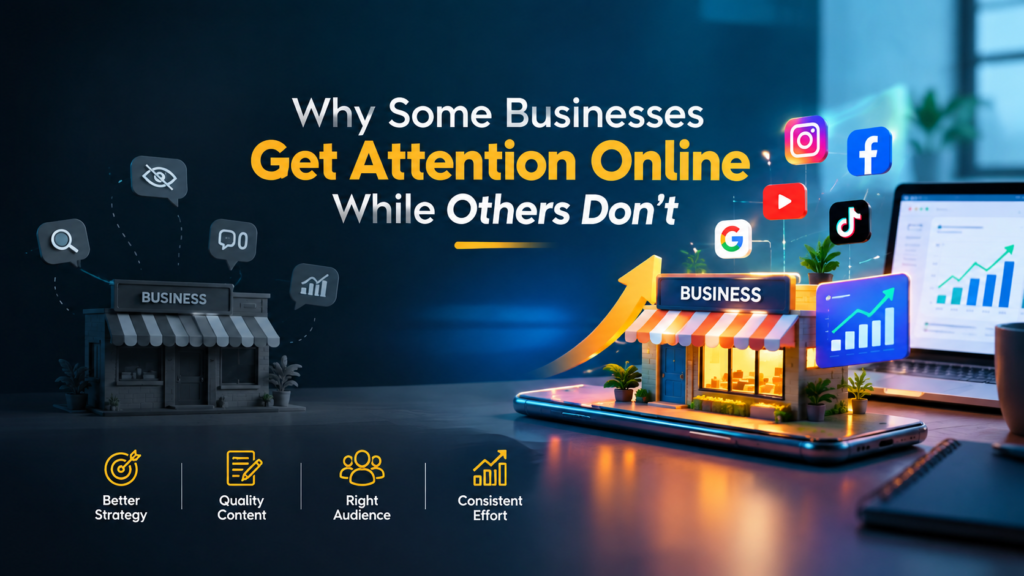
Why Some Businesses Get Attention Online While Others Don’t Have you ever noticed how some businesses seem to be everywhere online, while others with equally good products stay invisible? This is not luck. It comes down to a few clear habits that visible businesses follow and others skip. They Know Who They Are Talking To Businesses that get noticed online have a clear idea of their audience. They know their customer’s age, interests, problems, and where they spend time online. This lets them create content that feels personal instead of generic. Businesses that struggle often try to speak to everyone. When you try to reach everyone, you usually connect with no one. They Show Up Consistently Attention online is built over time, not overnight. Businesses that grow their presence post regularly, whether it is once a day or three times a week. They stay visible even when the results are not immediate. Many businesses post once, see no response, and give up. Consistency is what builds trust and familiarity with an audience. They Solve a Problem, Not Just Sell a Product People do not scroll through social media looking for ads. They are looking for value, whether that is useful information, entertainment, or a solution to a problem. Businesses that grab attention focus on answering questions their customers already have. The ones that get ignored usually talk only about themselves, their offers, and their products. They Understand the Platform They Use Every platform works differently. What works on Instagram may not work on LinkedIn or YouTube. Visible businesses study the platform they use and adapt their content style, format, and tone to match it. Businesses that get overlooked often use the same content everywhere without adjusting it, which makes it feel out of place. They Pay Attention to First Impressions  website that loads slowly, a profile photo that looks unprofessional, or a bio that is unclear can push potential customers away in seconds. Businesses that succeed online treat their digital presence with the same care as a physical shop. Small details like a clean website, clear contact information, and simple navigation make a big difference in whether someone trusts a business. They Use Data to Improve Successful businesses look at what is working and what is not. They check which posts get engagement, which keywords bring visitors, and which offers convert. Then they adjust their approach based on this information. Businesses that stay invisible often keep repeating the same strategy without checking if it actually works. They Build Real Connections Replying to comments, answering messages, and engaging with followers builds a relationship. People are more likely to support and recommend a business that feels approachable. Businesses that ignore their audience, even when comments and messages come in, slowly lose the trust they could have built. The Bottom Line Getting attention online is not about spending a huge budget or having a perfect product. It is about understanding your audience, showing up consistently, offering real value, and paying attention to details that matter. Any business can improve its online presence by focusing on these habits, one step at a time.

Uncategorized

How AI Is Quietly Rewriting the Rules of Digital Marketing

How AI Is Quietly Rewriting the Rules of Digital Marketing A few years ago, “using AI in marketing” meant setting up a chatbot on your website and calling it innovation. Today, it means something much bigger: AI touches almost every stage of a marketing campaign, from the first spark of an idea to the final performance report. And yet, despite all the buzz, most businesses are still only scratching the surface of what’s actually possible. If you run a business, manage a brand, or work in marketing yourself, here’s a grounded look at what’s really changing, what’s hype, and how to use AI without losing the human touch that makes marketing actually work. The Shift: From “Doing More” to “Doing Smarter” For a long time, marketing was a numbers game. More content, more ads, more channels, more budget. AI hasn’t changed that instinct entirely, but it has changed what “more” costs you. A single marketer today can research keywords, draft ad copy, analyze customer sentiment, and personalize email campaigns — tasks that used to require a small team. That doesn’t mean AI is replacing marketers. It means the marketers who know how to direct AI well are now doing the work of five people, while the ones who ignore it are falling behind quietly, without even realizing it yet. Where AI Is Actually Making a Difference 1. Content creation, but with a catch AI tools can draft blog posts, ad variations, and social captions in seconds. The catch? Generic AI content sounds generic. Audiences can tell. The brands winning with AI-assisted content are the ones using it as a first draft, not a final product — then layering in their own voice, real examples, and genuine opinions before anything goes live. 2. Smarter targeting and personalization AI-driven platforms (think Meta Ads, Google Performance Max) now optimize targeting in real time based on patterns humans simply can’t track manually. This means fewer wasted impressions and more relevant ads reaching the right people at the right moment. 3. SEO that thinks beyond keywords Search itself is changing. With AI-powered search experiences becoming mainstream, SEO is no longer just about keyword density — it’s about answering real questions clearly and building genuine topical authority. Tools can help identify content gaps and search intent faster than manual research ever could. 4. Customer service that never sleeps AI chat assistants have gotten good enough to handle a real chunk of customer queries — not perfectly, but well enough to free up human support for the conversations that actually need a human. 5. Data that tells a story, not just numbers Instead of staring at spreadsheets, marketers can now ask AI tools plain-language questions about campaign performance and get insights in seconds. This shortens the gap between “we have data” and “we know what to do next.” Where AI Still Falls Short It’s worth being honest here: AI is a tool, not a strategist. It doesn’t understand your brand’s history, your customers’ unspoken frustrations, or the cultural nuance that makes a campaign land in one market and flop in another. AI-generated content, left unedited, tends to sound polished but hollow — correct, but forgettable. The brands that stand out are the ones that use AI to handle the repetitive heavy lifting, while humans focus on strategy, storytelling, and the judgment calls that come from actually understanding people. How to Use AI in Your Marketing Without Losing Your Voice Use AI for the first draft, not the final word. Let it generate ideas, outlines, and rough copy — then edit it until it sounds like you. Feed it context, not just instructions. The more specific information you give an AI tool about your audience and goals, the better the output. Keep a human in the loop for anything customer-facing. Automate the process, not the relationship. Track what’s actually working. AI tools are only as useful as the decisions you make with their output — review performance regularly instead of setting and forgetting. Stay curious. The tools are evolving monthly. What worked six months ago in SEO or ad targeting may already be outdated. The Bottom Line AI isn’t replacing digital marketing — it’s raising the bar for what “good” marketing looks like. The businesses that thrive won’t be the ones using AI the most, but the ones using it thoughtfully: automating the repetitive, amplifying the creative, and never forgetting that behind every click is a real person deciding whether to trust your brand. The future of digital marketing isn’t AI or human. It’s AI-assisted, human-led.

Uncategorized

Why Digital Marketing Matters for Modern Businesses

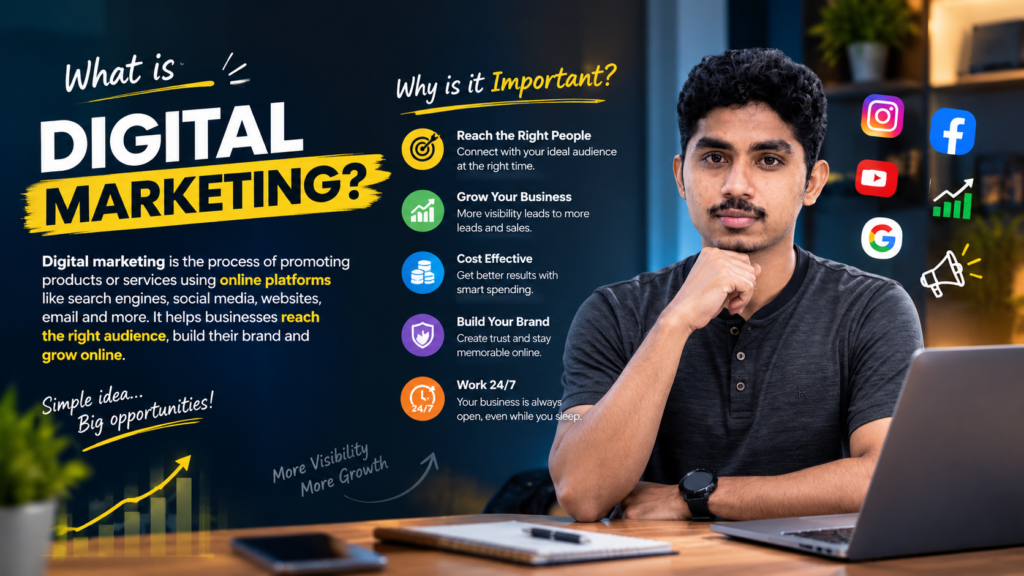
Why Digital Marketing Matters for Modern Businesses Digital marketing has become an important part of how businesses reach and connect with people. Today, customers often search online before choosing a product, service, shop, or brand. Having a strong online presence helps businesses stay visible and build a connection with the right audience. What Is Digital Marketing? Digital marketing is the process of promoting a business through online platforms. It includes search engine optimisation, social media marketing, content marketing, online advertising, email marketing, and website marketing. Each method has a different purpose, but the main goal is to reach the right people with the right message. Why Is Digital Marketing Important? Traditional marketing can help a business reach people, but digital marketing offers more ways to connect with a specific audience. Businesses can understand what people are interested in, create useful content, and communicate directly with potential customers.A good online presence can also help build trust. When customers find a professional website, useful content, and active social media pages, they can get a better understanding of the business before making a decision. The Role of Content Content plays an important role in digital marketing. Good content is not just about promoting a product or service. It should provide value, answer questions, solve problems, or simply give people a reason to remember a brand.From social media posts and blogs to videos and advertisements, useful content can help a business stay connected with its audience. Digital Marketing Is About People Successful marketing is not only about tools, platforms, or advertisements. It starts with understanding people. Knowing what customers need, what problems they face, and what kind of information they are looking for can make marketing more meaningful.Every business has its own story and audience. A good digital marketing strategy should reflect that uniqueness rather than simply following every trend. Building a Strong Online Presence A strong online presence does not happen overnight. It takes consistent effort, useful content, proper planning, and a clear understanding of the audience.Whether it is a small local business or a growing brand, digital marketing can create opportunities to reach new customers and build long term relationships. Final Thoughts Digital marketing is constantly changing, but one thing remains the same: people connect with businesses that understand their needs and communicate clearly.The right strategy, combined with consistent effort and valuable content, can help a business grow its online presence and create meaningful connections with customers.

Scroll to Top